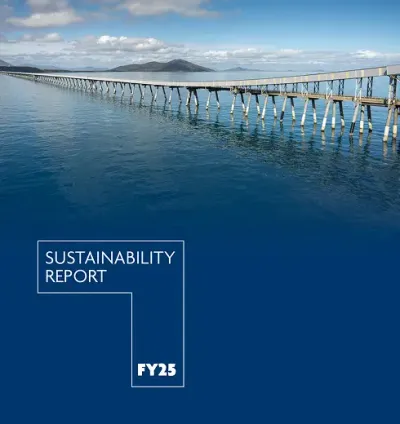
The waters surrounding the North Queensland Export Terminal are home to whales and other marine mammals and sea life whose presence demonstrates that our business and a vibrant marine ecosystem can coexist.
Our operations adhere to international and domestic laws that regulate the movement of ships to protect the marine environment.
The Great Barrier Reef Marine Park Authority (GBRMPA), along with the Australian Maritime Safety Authority (AMSA) and Maritime Safety Queensland (MSQ) oversee and enforce these regulations.
The North Queensland Export Terminal has significant natural advantages that minimise the impact on the marine environment.
As the Terminal’s two berths are in deep water, no dredging is required, and vessels access the Terminal via shipping lanes that follow naturally occurring channels.
NQXT Pty Ltd has incorporated special features into the Terminal’s infrastructure to support the local marine environment.
For example, the greater Port of Abbot Point area is home to green and flatback sea turtles and these species return annually to use nearby beaches for nesting.
Special amber coloured light has been installed on the Terminal’s infrastructure to minimise the risk of light impacts on baby turtles as they use the natural light from the horizon to find their way to the ocean when they first hatch.
The lights are also placed in areas to prevent glow encroaching into nearby habitats and the amber lighting is beneficial to the movement and behaviour of other wildlife including echidnas and migratory birds.
We extend the same meticulous care and respect for the local terrestrial environment as we do for the marine environment in which we operate.
NQXT Pty Ltd operates with a plan for current operations and long-term rehabilitation.
This focus covers sustainable water use, dust and waste management.
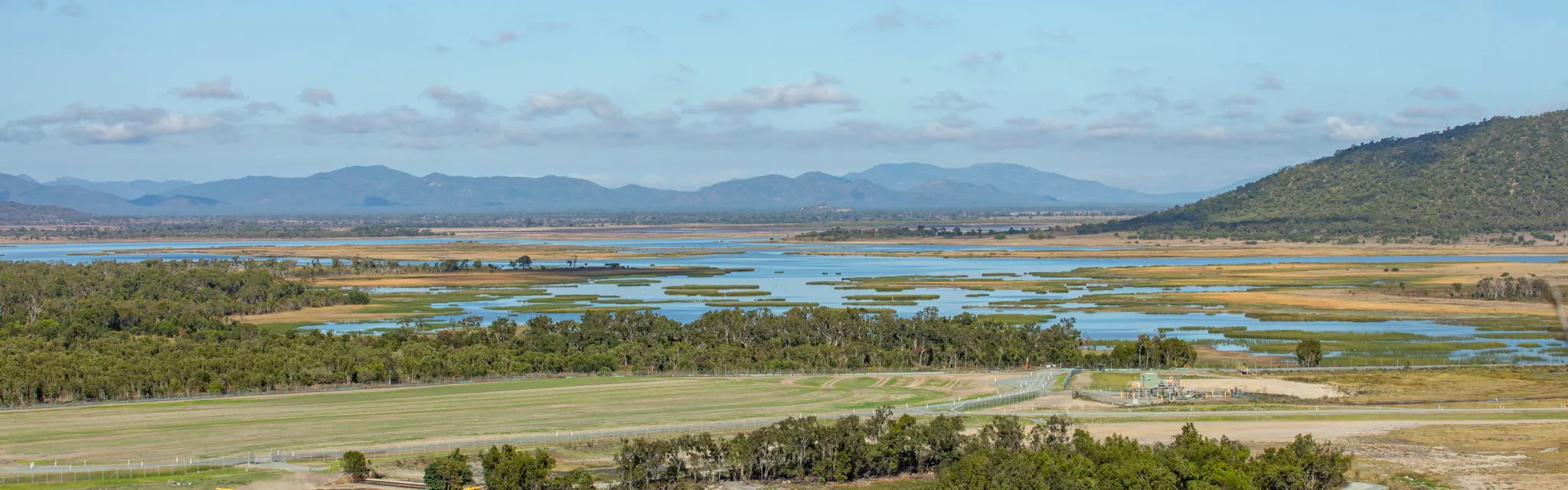
The 5,150-hectare man-made Caley Valley Wetlands are located to the west and south-west of the Terminal.
Our operator, APO, undertakes a range of operational and environmental actions at the Terminal to protect this valued ecosystem which is classified in the Directory of Important Wetlands in Australia (DIWA) as a nationally important marine and coastal zone wetland. These include managing water that collects onsite during heavy rain and ensuring it is not released into the surrounding environment unless it meets strict standards for water quality.
The wetlands create an important ecosystem for migratory and resident shore birds, and approximately 218 native bird species can be found in the area.
Management activities include investment in water infrastructure, compliance with strict water quality requirements and monitoring stormwater.
NQXT Pty Ltd undertakes export operations for our customers in an efficient manner.
We report on Scope 1 and Scope 2 Green House Gas (GHG) emissions consistent with the requirements of the Federal National Pollutant Inventory (NPI) Reporting and Greenhouse and Energy Reporting Scheme (NGERs).
We work to continuously assess opportunities for energy saving measures and implement technology to deliver energy savings.